B.o.S. Manual & RACE Variant
Welcome to the Beauty of Symmetry game manual. This is a logic puzzle that also trains your observation and imagination. To successfully solve each level, you’ll need to plan your moves ahead. It’s not chess, but we hope you’ll enjoy it just as much.
The core idea: with as few moves as possible, try to achieve symmetry of randomly placed balls with respect to any vertical axis. In other words, you create a symmetric picture from the balls.
Game Rules
Select a ball by clicking or tapping it. Blue rings will indicate which balls are going to move together.
If there are balls stacked under the selected one, those balls move together as a pack.
Move your mouse (or your finger) to a free spot in the target column where you want to place the pack. To help you aim precisely, a preview column is shown.
If you use a mouse, click to confirm the move. If you use touch, simply lift your finger to confirm the move.
The moved balls always land on the highest free positions of the chosen column.
If the column already contains balls, your pack is placed at the nearest free space below the topmost occupied position.
If the target column doesn’t have enough free cells for the whole pack, the move is not performed.
Multi-color: you must achieve symmetry for all colors with respect to the same vertical axis. When moving from a column that contains multiple colors, the whole pack moves together — regardless of color.
Each level has a maximum allowed number of moves (MaxMoves). If you exceed this limit, you can retry by pressing “Repeat”. Most puzzles have multiple valid solutions.
On the 8×8 board with one color the game starts with four balls and the maximum is 36. The two-color game allows up to 14 white and 14 black balls. The three-color game allows up to 8 balls of each color (white, black, red).
On the 12×12 board with one color the game starts with thirteen balls and the maximum is 66. The two-color game allows up to 27 white and 27 black balls. The three-color game allows up to 19 balls of each color (white, black, red).
After you complete all rounds and handle the highest ball counts, the game continues by randomly generating different counts for each color.
One-Color Example & Video Tutorial
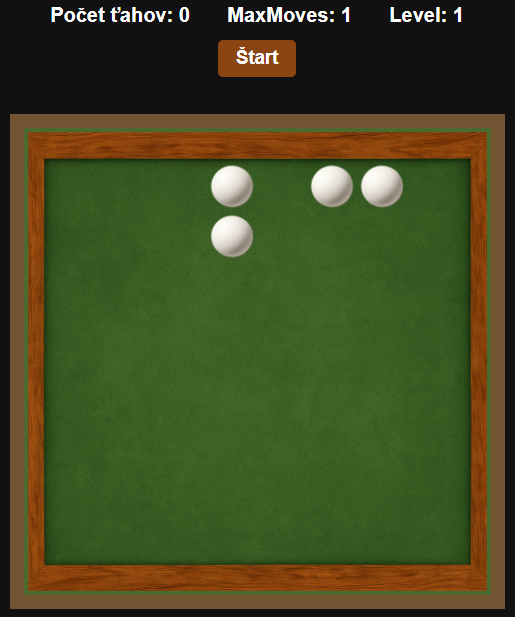
Image 1: Initial task
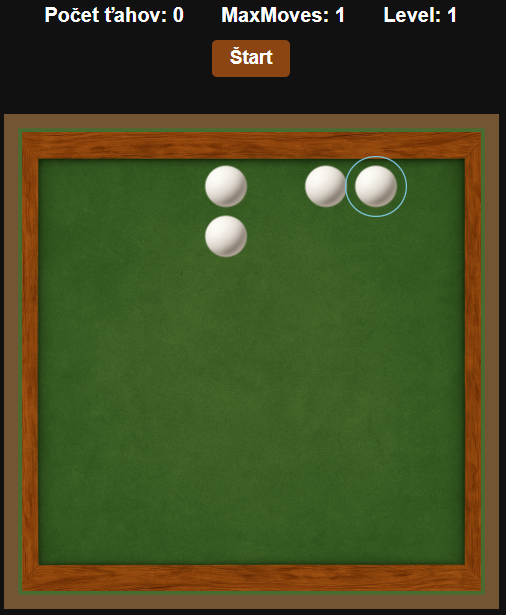
Image 2: Selected ball to move
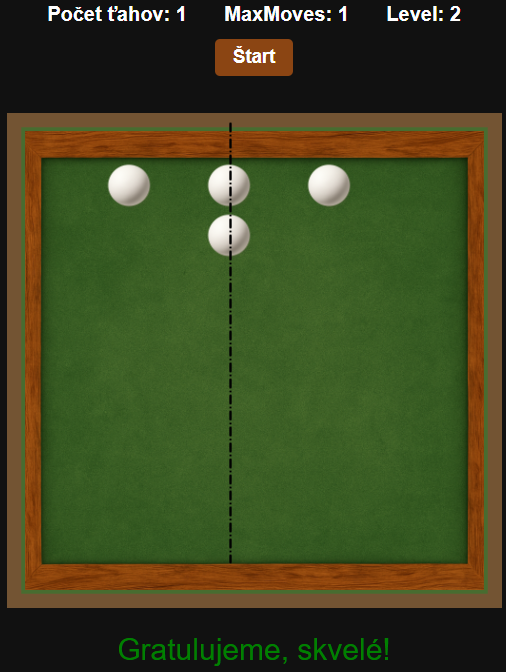
Image 3: Symmetry achieved
Two-Color Example & Video Tutorial
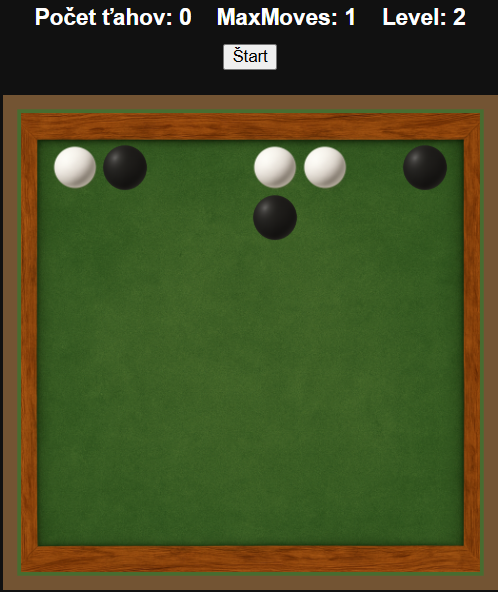
Image 4: Puzzle setup
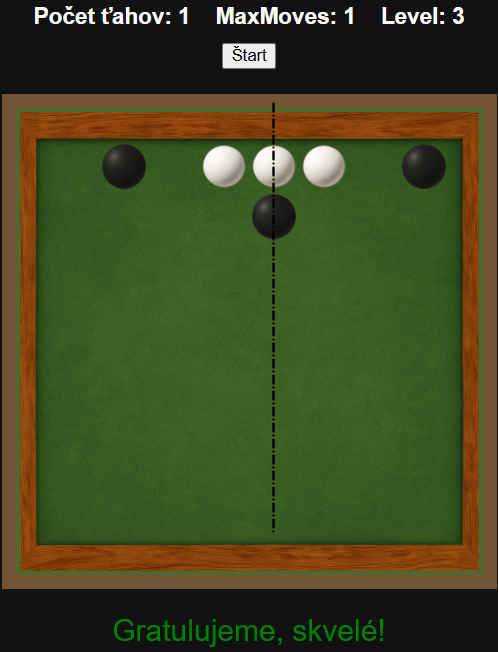
Image 5: After moving a white ball — symmetry
Three-Color Example & Video Tutorial
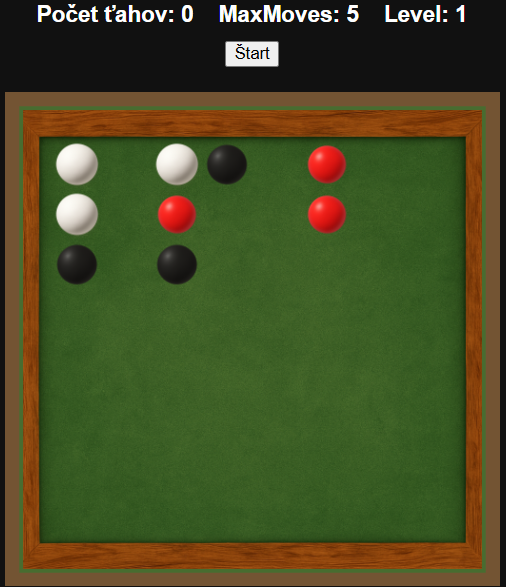
Image 6: Initial task
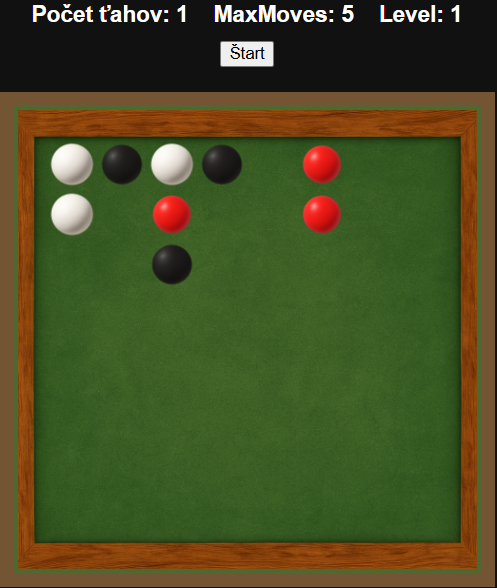
Image 7: First move with a black ball
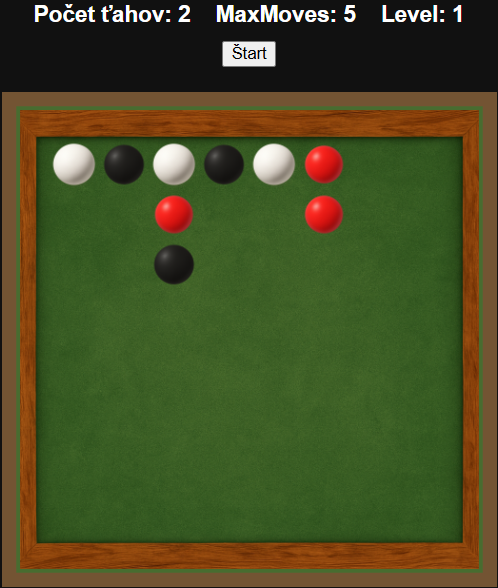
Image 8: Second move with a white ball
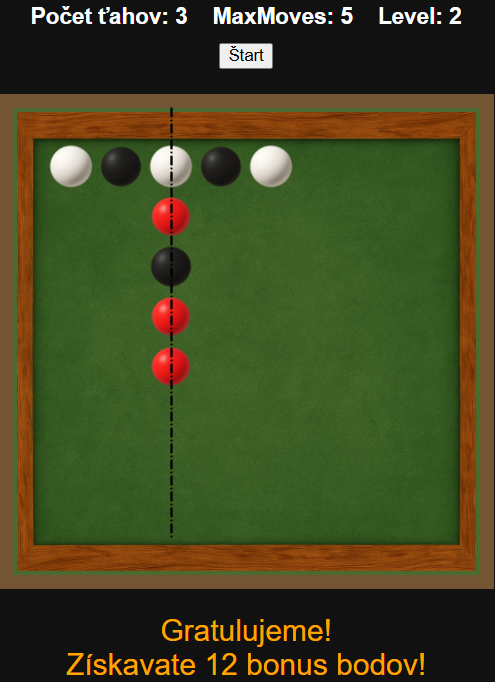
Image 9: Third move — two red balls (symmetry)
Music in the Game
Many thanks to the composers who allowed free distribution of their music: Peter D. Kazhe, Rafael Krux, Kevin MacLeod, and others I could not identify.
MaxMoves & Scoring
In the one-color variant, MaxMoves is the minimal possible number of moves. It is computed exactly up to 20 balls; beyond that, the calculation becomes too expensive, so MaxMoves is replaced by a fixed value of 3.
In the two- and three-color variants, MaxMoves is not guaranteed to be the absolute minimal number of moves to reach symmetry. Try to find the best solution you can.
You earn one point per move.
Multiplayer variant
Allows multiple players to play - from 2 to 10. They play the same tasks and the one who has the fewest moves and the shortest time wins.
One of the players opens the room - gets a code and distributes this code to the other players.
Players must have the same variant open, otherwise they will not be able to play.
RACE Variant
In RACE mode, you play a fixed number of rounds — for one color it’s 20 rounds; for two and three colors it’s 5 rounds. After a successful run you’ll be prompted to submit your score to the Leaderboard.
Your ranking depends on your points. Fewer points (fewer moves) is better. If two players have the same number of points, the shorter total time wins.
If you leave the game, the original assignment is not preserved like in the “fun” version — a new one is generated and you receive penalty points depending on the variant you’re playing. This prevents solving the puzzle while the timer is not running.
Have fun! 😊